Artist Profiles - Husna Hossain - Multidisciplinary Artist
Rooted in Heritage, Growing Through Creativity
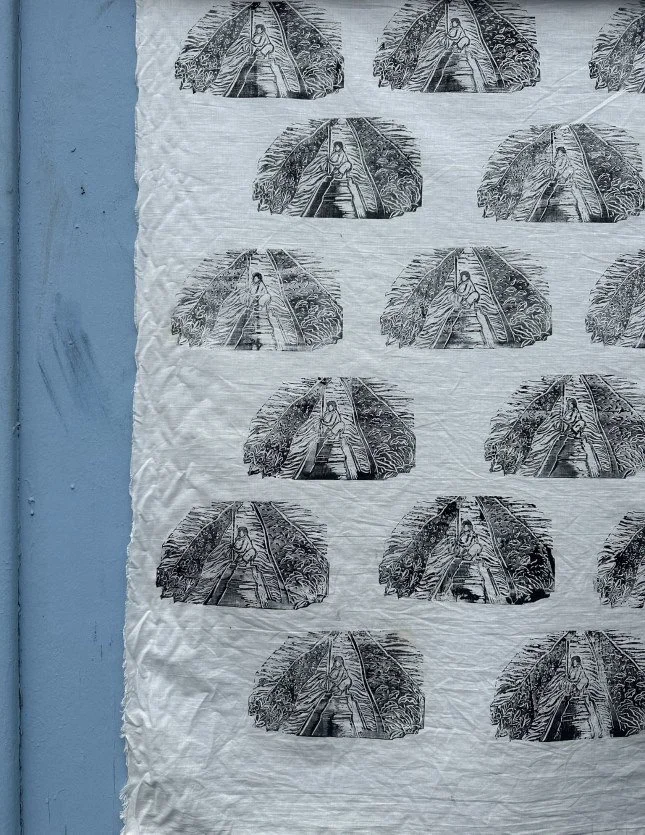
Husna Hossain is a multidisciplinary artist, whose work is deeply informed by her Bangladeshi heritage, Islamic faith, and a passion for preserving cultural identity through making. Her practice explores the intersections between tradition and innovation, rural craft and contemporary art, post-colonial critique and personal storytelling. Recently, Husna was approached to contribute to an exhibition on floating gardens in Bangladesh, a subject that resonated deeply with her own background and interests. As someone of Bangladeshi heritage, she was excited to engage with a project that not only highlights environmental resilience but also celebrates the ingenuity of rural life.
For Husna, floating gardens are more than an agricultural innovation, they are a living metaphor for creativity, adaptability, and cultural continuity. Built on water using natural materials like bamboo and jute, these gardens embody the same principles she values in her own work: sustainability, practicality, and connection to land and legacy. She sees these structures as a powerful reminder of how South Asian village life is rich with solutions born from necessity, skill, and intimate knowledge of the natural world.
Drawing Inspiration from Grandfather’s Creative Journey
Husna shares anecdotes about her grandfather and how his creativity is something that inspired her. Her grandfather’s journey is truly inspiring. He started his career as an engineer and even worked with the British Army. However, he did not limit himself to just engineering. In his spare time, he began making things at home, showcasing his innate creativity and resourcefulness. For her grandmother, he was the first-ever product designer she knew. Husna remembers her grandmother telling her stories of how he would even read books by the light of a torch instead of going out to buy things, he would make them himself. That is where she draws her inspiration from: his ability to create and innovate with limited resources.
Reclaiming Heritage and Showcasing Incredible Craftsmanship in Post-Colonial Research
Husna’s PhD research focused on the post-colonial period and examined how colonialism influenced art and design in South Asia. During colonial times, many skilled South Asians were exploited for their talents and craftsmanship. However, despite the challenges they faced, they managed to maintain a rich legacy of making. She is passionate about keeping this legacy alive and continuing the South Asian tradition of being makers. She spent time in Bangladesh, immersing herself in the traditional crafts of bamboo, jute, and clay. It is astonishing to see how many of these skills have been lost over time. Reviving and uplifting artistic skills is of utmost importance to her, as it allows South Asians to reclaim their heritage and showcase their incredible craftsmanship.
Celebrating Village Life: Passing Down South Asian Heritage with Art
Village life holds immense importance in South Asian culture, and Husna is very vocal about her deep appreciation for it. She believes it is where everything begins, from dyeing fabrics to harvesting bamboo. The practicality and making of art happen right there, with all the necessary materials present. Through her art, she aims to maintain the South Asian legacy and celebrate the beauty of village life.
Growing up with her grandparents gave her a firsthand experience of the rich history and practicality that village life embodies. For her, art is not always about money; it is about the process. She sees art and design as coming from the heart, existing in both tangible and intangible forms that truly capture its essence.
Visiting family every two years for six months has been an incredible experience, allowing her to witness how harvesting and farming work, and reinforcing the importance of passing down culture to future generations. She feels strongly about showing their children that they are a mix of Welsh and Bangladeshi and believes it is crucial not to lose those roots or become moulded into a single identity. For her, it is all about embracing and celebrating a diverse heritage.
Preservation, Print, and Pattern
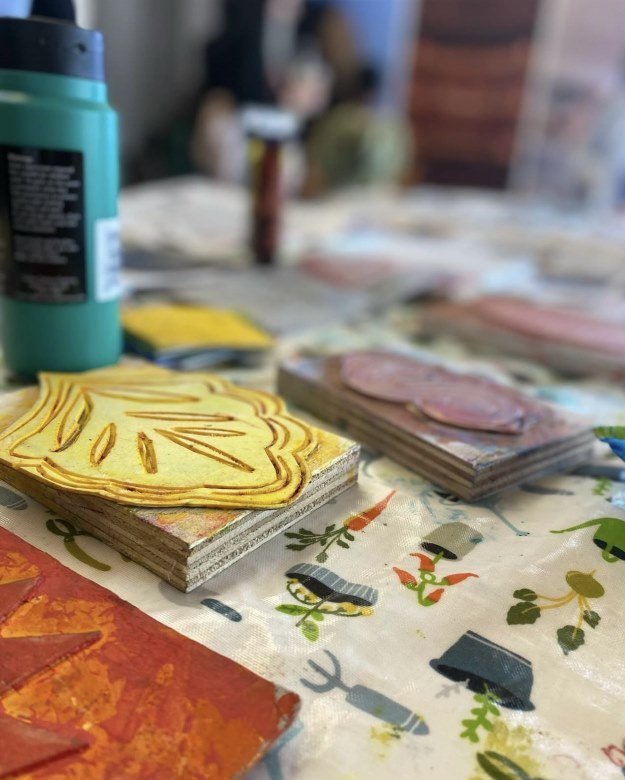
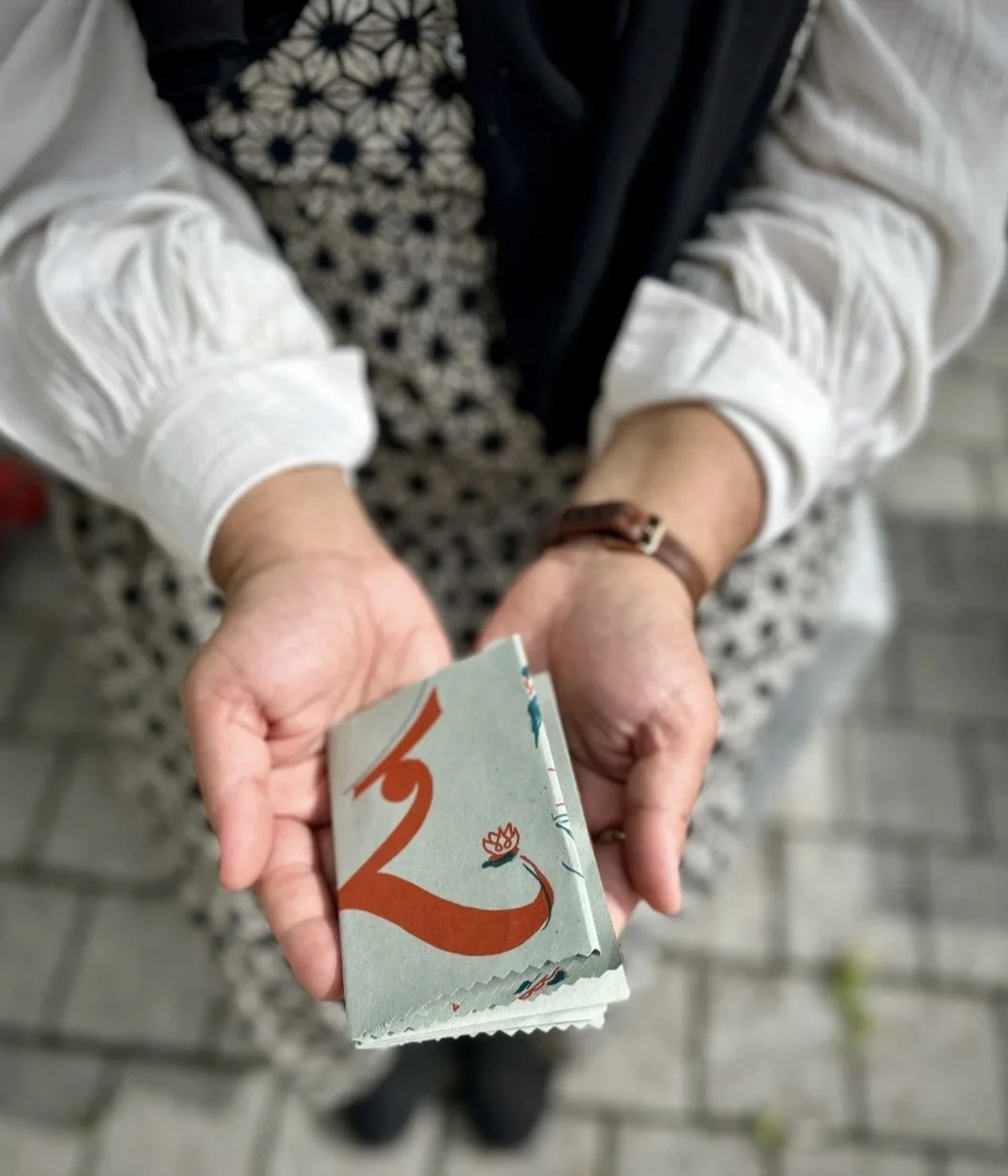
Husna is drawn to bold, nostalgic visuals, particularly those found on vintage Bangladeshi tins and movie posters. Printmaking, especially lino printing, is a favourite medium through which she explores these influences. Recently, she has shifted focus towards geometric forms and soft, flowing lines reminiscent of traditional Bangladeshi motifs. Her connection to the natural world, especially the Bengal Sea, continues to inspire her practice. She has also begun exploring Palestinian tatreez (embroidery) and quilt-making through community projects like Chatterbox. Her in-depth engagement with tatreez over the past year reflects her broader commitment to textile art as a form of storytelling and cultural preservation. For Husna, heritage is not a trend, it is a responsibility. She speaks passionately about the need to protect and correctly attribute traditional designs, warning against cultural appropriation. In her words, “No matter how many Westerners take a cultural idea and make it their own, it won’t work,these designs belong to the people and places they came from. Don’t mistake gentleness and humbleness for weakness; there is strength in preservation.”
Art as Education, Identity, and Healing
Currently, Husna teaches art in a Muslim school, where she blends creative expression with Islamic values while meeting the standards of the Welsh curriculum. She refers to her students as “young artists” and fosters a classroom culture where creativity is not just encouraged, but essential. Her lessons integrate faith, culture, and hands-on making, empowering students to explore identity through art.
Husna also extends her skills to community workshops. As part of a workshop for new Muslim sisters who had recently taken their shahadah, she led a clay-making activity designed to help participants explore their evolving identities. Each person was encouraged to mould the clay in any way they chose, using the process as a reflection of the self. The activity emphasized that while outward forms may change, their core identity remains intact, reinforcing the idea that embracing Islam does not mean losing oneself, but rather taking on a new form while staying true to who they are.
She is actively involved in the Muslim Heart Project, which focuses on Islamic psychology and wellness, and uses art to help people connect with themselves and their faith. For her, finding quiet spaces to create is an essential act of self-care and mental wellbeing.
Future Aspirations and Advice
Looking ahead, Husna dreams of expanding her creative practice through meaningful collaborations that celebrate traditional craftsmanship. One of her most cherished aspirations is to work with Aarong, a renowned Bangladeshi brand known for its high- quality handmade furniture, textiles, and bespoke pieces.
She also hopes to build stronger connections with local artists in Bangladesh, seeing it as a powerful opportunity for cultural exchange, skill-sharing, and community collaboration.
Husna encourages aspiring creatives to remain consistent in their practice, to believe in their abilities, and to stay resilient in the face of challenges. She advocates seeking inspiration through books, conversations, and creative communities, and emphasises the importance of joining groups and networks that align with one’s values and goals.