Artist Profiles - Farah Allibhai - Multidisciplinary Artist
Early life and passage into art
Farah Allibhai grew up in an era when working-class women of colour were largely excluded from the arts, regardless of their talent, passion, or potential. Access to creative spaces, resources, and opportunities felt distant and out of reach. Looking back, she traces the beginnings of her creative journey to sixth form, when she made the decision to attend evening life-drawing classes. At the time, she wasn’t formally studying art, but those classes offered her a quiet entry point into a world she felt deeply drawn to. They became a space where she could observe, experiment, and nurture a practice that, although still unshaped, was undeniably hers.
It would be many years later, in her mid-30s, that she took the decisive step of enrolling in art college. That moment marked a turning point, a clear shift from pursuing her interests to actively committing herself to the discipline. Since then, the work she makes has been in a state of continual evolution, shaped by her experiences, her inner growth, and her ongoing engagement with the world around her.
Creative Practice & Artistic Identity
Farah describes her signature style as “spiritual, decolonial, emancipatory, and nonmaterial.” Her work is rooted in “inner transformation and collective healing,” frequently delving into the ancestral and relational issues centered on “presence, process, and possibility” rather than material outcomes.
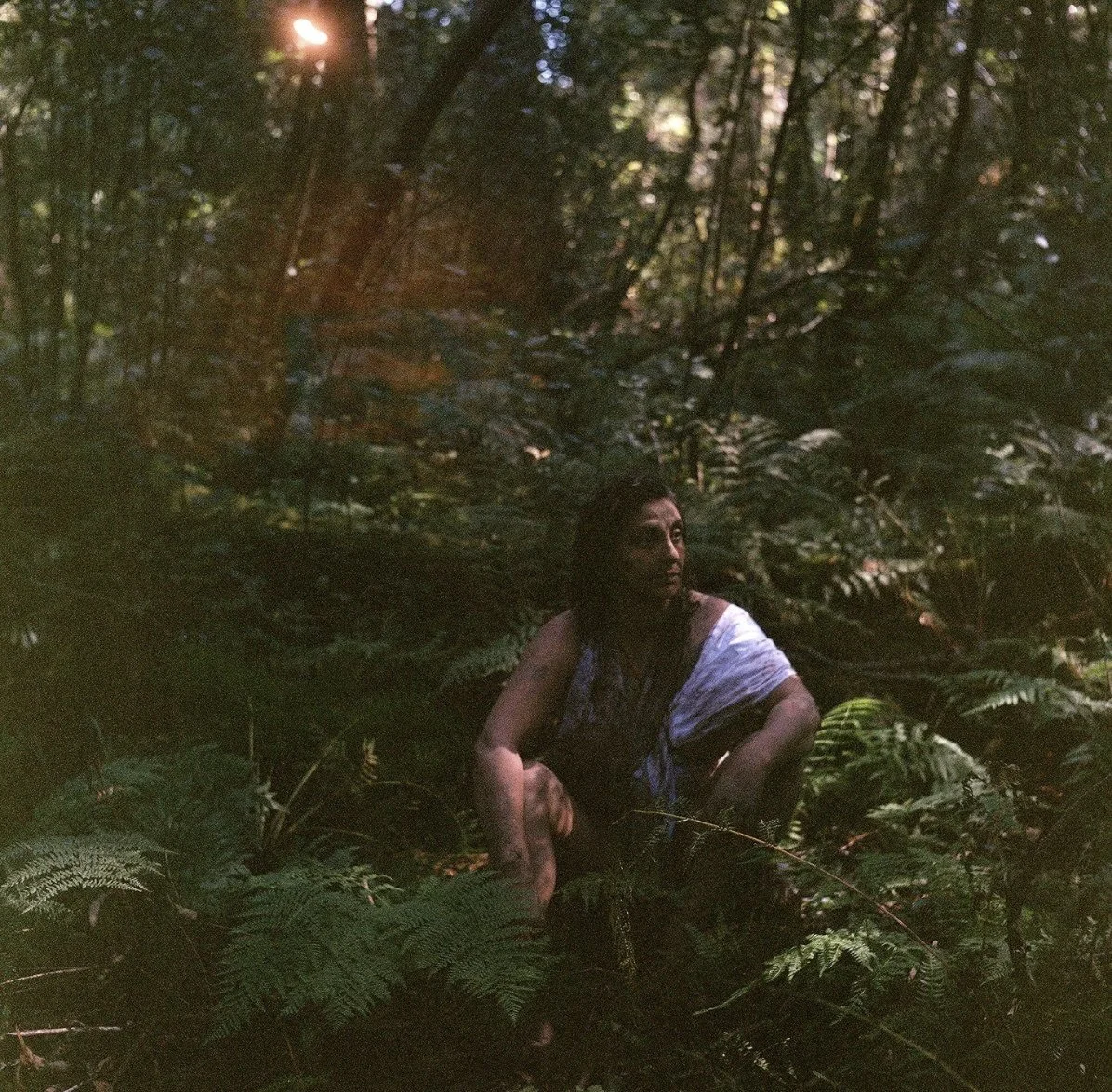
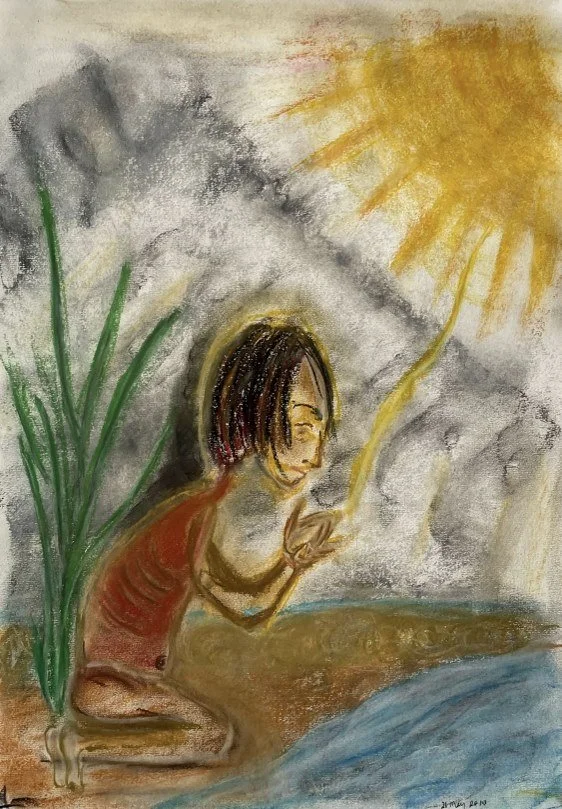
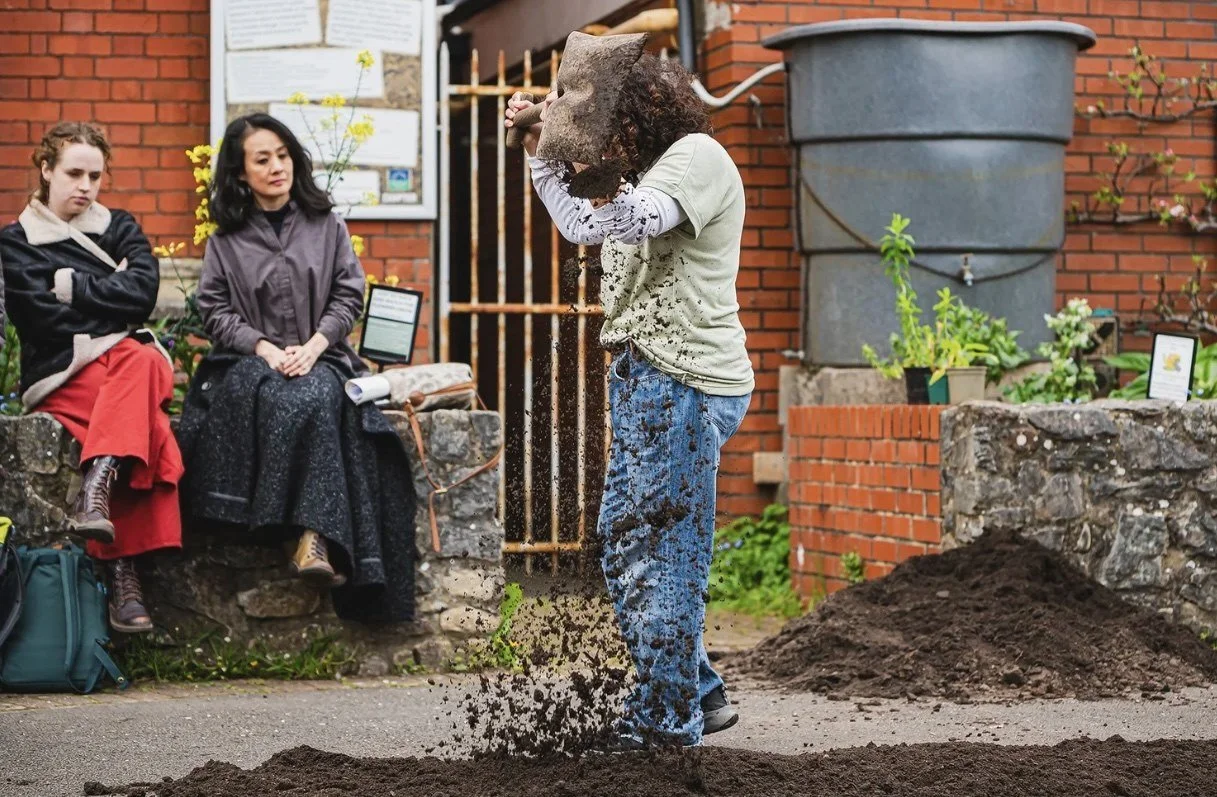
Primarily engaged in time-based visual performance art, Farah also draws and writes as part of her creative process. Her work is deeply observational, experiential, performative, and site-specific, blending lived experience with metaphysical and spiritual themes
Collaboration, Community & Collective Engagement
Collaboration has been an important and enriching part of Farah Allibhai’s creative journey. She speaks with warmth about her experience working as part of the 1800hrs art collective, describing it as meaningful “in so many ways and for so many reasons.” For her, the process of everyone contributing and watching ideas develop together was both energising and affirming. It offered a shared space where creative voices could meet, overlap, and build something collectively that was greater than any one individual contribution.
Community engagement is not just an occasional element of Farah’s practice, it is a core principle. She often works directly with people, valuing the relationships and exchanges that emerge through the process. At other times, she creates pieces designed to invite connection or reflection, giving audiences space to step in, pause, and engage with the work on their own terms.
This approach has taken many forms in her artistic career. In My Bhᾶti Part 2 (2024), she invited participants to gather around food, creating a shared moment to reflect, honour others, and acknowledge the nourishment both literal and symbolic that such gatherings can bring. Her 2021 work Can we rest? offered a guided walk, encouraging participants to slow down and embrace the restorative power of rest in a culture that often resists it. In What concerns you on a daily basis (2015), she collaborated with a community to collect anonymous worries, transforming them into a physical and performative piece, a dress, a tea ritual, and a space for reflection that honoured those concerns while also holding them collectively.
Across these projects, whether intimate or large-scale, Farah’s emphasis remains on creating encounters that nurture presence, invite openness, and allow people to connect with themselves and with one another.
Inspiration & Creative Drive
While the work of other artists inspires her, Farah’s greatest source of inspiration comes from the belief that art has the power to transform lives her own and those of others. This belief runs like a thread through everything she creates, guiding her towards work that feels purposeful and resonant. She draws deeply from her lived experiences and the world around her, finding meaning in both the personal and the shared.
Farah feels compelled to create work that is both meaningful and healing. Especially now, at a time when the world is in need of so much repair, her art has become a way to respond, to connect, and to nurture hope
A Creative Milestone
Farah Allibhai is proud of all her work, especially because, as an artist with disabilities, each piece is created under challenging circumstances, materially, physically, and emotionally. Her practice often begins from a difficult, deeply vulnerable place, which means that every creation feels hard-won. For her, each completed work arrives not only as an achievement but also as a blessing, a tangible reminder of what can emerge despite the obstacles.
Among the many projects she has undertaken, one that stands out is the building of her website. This was more than a practical task; it became a significant milestone in her journey. On a technical level, it required time, effort, and perseverance. On an emotional level, it asked her to gather and weave together the many threads of her practice into a single, cohesive form. That process of organising, selecting, and articulating her work offered her a new clarity helping her to see her artistic path more fully and to claim ownership of her voice as an artist. In doing so, it marked a moment of affirmation, a point where her identity as an artist felt fully present and recognised.
Message and Intention
Farah is cautious about art that tries to force a specific message or outcome. Instead, she views her work as an invitation, encouraging people to explore hidden spaces within their inner and outer worlds that they might not usually access or consider.
The themes in her work revolve deeply around her own healing and lived experience, but they also reach beyond the personal to touch on universal aspects of our shared humanity. These include life and death, history and trauma, displacement, ancestral traditions, presence, stillness, and connection to land and nature.
Farah would like to think that her work gently challenges stereotypes related to age, culture, and being a South Asian Muslim woman. Through this, she hopes to open space for a more nuanced and authentic understanding of both herself and others who share similar identities, and of the work they create.
Upcoming Projects & Future Aspirations
Farah aspiration is for her work to keep evolving and growing alongside her own personal process while remaining responsive to what’s happening in the world. She is less focused on fixed outcomes and more interested in allowing the practice to unfold naturally, wherever it needs to go next. This openness to growth and change reflects a deep trust in the creative journey as an organic, living process rather than a rigid path with predetermined destinations.
Advice for Emerging Artists
Farah is humble about giving advice, stating she’s “not sure I’m the best person to give advice,” but she believes it’s really valuable to have someone you can talk to in the arts, someone who can offer guidance or help you navigate things. For her, going to art college was key; it allowed her to learn about different artists, materials, methods of working, and ways of thinking and translating ideas. Another major turning point was participating in the Wales Lab residency with National Theatre Wales, an experience that deeply shaped her creative practice. She recommends seeking out development opportunities like these.
She also suggests reaching out to organisations such as Arts Council Wales to introduce yourself and share your work. Although self-advocacy can feel daunting, it is often necessary. Farah feels arts organisations are generally becoming more approachable.
She also acknowledges an important reality: there is a difference between making art and building a monetised career in the arts. From her experience, having a ‘successful’ art career often involves attending a well-regarded art college and earning an MA, this seems to be a common route. However, the reality is that making a living from art remains a privilege that can depend on support networks, financial security, networking opportunities, and how people connect with you and your work.
For those who don’t have those advantages but still feel compelled to make work, Farah encourages trust in the existence of a path for you. She advises staying curious, staying open, and trying to understand how the art world functions. That awareness, she says, can help you find your own way through it and make better choices